
How Do Ceramic Printed Circuit Boards Resist Corrosion?
Ceramic Printed Circuit Boards Resist Corrosion
Ceramic substrates are the backbone of many electronic devices, especially those that need to withstand high-temperature and harsh environments. As such, these PCBs are used in critical applications like aerospace and automotive electronics, medical equipment, and telecommunication infrastructure. These components are engineered to be strong and reliable, allowing them to operate in extreme conditions without compromising the performance of the device. Nevertheless, they still require proper thermal management to prevent the build-up of heat and signal interference. The following are some of the essential guidelines to consider in designing PCBs with ceramic substrates.
Alumina or Aluminum Oxide, Aluminum Nitride, Beryllium Oxide, and Silicon Carbide are the most commonly used substrate materials for ceramic printed circuit boards. Alumina is a non-oxide semiconductor material that has a bluish-white color when 100% pure, but it can be white, gray, or pale yellow when impure. It has a very low coefficient of expansion and can withstand high temperatures. It also has good solderability, a key factor for ensuring the longevity of ceramic circuit boards.
To make a ceramic printed circuit board, manufacturers prepare the raw material and apply it to a metal foil using a copper-based pre-plate. They then use photolithography to transfer the inner-layer circuit pattern onto the plate. After that, they chemically etches away the tin-lead layer and add copper by sputtering, followed by a gold plating process. Next, the fabricator drills via holes in the ceramic layer using medium or low power RF CO2 lasers. The metal conductor is then deposited using an oxygen-containing eutectic solution of copper and tin.
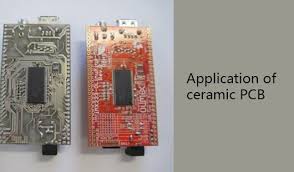
How Do Ceramic Printed Circuit Boards Resist Corrosion?
The resulting metal/ceramic hybrid board is then baked in a nitrogen environment up to 1000°C. During this step, the copper traces are prevented from oxidation by coating it with dielectric material. Manufacturers then deposit a conductive metal such as silver, gold, or the widely-used copper on top of this dielectric layer. Unlike traditional circuit boards, ceramic PCBs do not come with OSP or HASL finishes.
In addition to their superior corrosion resistance, these products offer better electrical insulation and mechanical strength than their metal-core counterparts. They also resist the effects of shock and vibration, allowing them to perform reliably in high-speed applications. Additionally, they are dimensionally stable, which minimizes warping or deformation and ensures the integrity of the components.
While these benefits are significant, there are some drawbacks to the use of ceramic printed circuit boards. They can be costly and difficult to work with, especially when compared to standard PCBs. However, the advantages outweigh these concerns. In the long run, ceramic PCBs are a cost-effective and reliable alternative to standard metallic ones. Moreover, they are ideal for demanding applications that demand high-speed communication and control. For this reason, they are frequently found in avionics systems, radar electronics, and advanced driver assistance systems. In the automotive industry, they are also used for powertrain electronics and automotive safety systems. In telecommunication infrastructure, they are used in base stations and fiber optic transceivers.