
How Flexible PCBs Impact Overall Product Weight and Size
Flexible PCBs Impact Overall Product Weight
Almost every day, you interact with a piece of electronic hardware that uses a flexible circuit board. These circuit boards are used in everything from laptops to mobile phones, MP3 players and cellular routers. Their use enables these devices to be smaller and more functional. Flexible pcbs are also more durable and can withstand multiple bend cycles. These characteristics make them an excellent choice for consumer electronics, as well as for rugged applications in the military and aerospace sectors.
The first step in creating a flexible pcbs is to design it using a software program that allows you to create a schematic diagram and a physical layout of the components. The software will guide you through a series of questions about each component and how it connects to the other components on the board. Once the layout is complete, the software will generate a set of files for fabrication and assembly. These files will include all the information needed to build the PCB, including schematics and a physical layout of each layer. The final step is to add labels, identifiers or markings that will help in the assembly process. These are sometimes referred to as reference designators and may be helpful for locating components on the finished PCB.
Flex PCBs are often made of multi-layers, and they can be either single or double-sided. The layers in a flex circuit are typically made of dielectric film, which is coated with an adhesive material or metal. The copper on the surface of a flex circuit is covered by a layer of protective material called a cover lay, which prevents oxidation. Some flex circuits are even coated with a silver or gold finishing to protect it from corrosive chemicals and extreme temperatures.
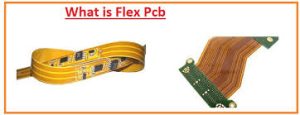
How Flexible PCBs Impact Overall Product Weight and Size
A flex circuit board can be fabricated with different options for the thickness of the dielectric films. For example, a single-layer flex circuit can be made from as thin as 0.002 mm to as thick as 0.08 mm. Choosing a thinner option for the board will save cost, but it may compromise flexibility.
The bending capability of a flex circuit board can be limited by adding stiffeners to specific points on the board. These stiffeners restrict the amount of bending and are useful in cases where a flex circuit needs to support a large component or resist harsh environmental conditions. For example, a stiffener can be added to the area that supports the display screen on a tablet computer or the moving print head of a printer.
Another option that can increase the cost of a flex PCB is to add a protective covering, such as soft gold or tin, on certain areas. This can be done to reduce electromagnetic interference (EMI) or to prevent the contact pads on a flex circuit from shorting during the assembly process. The thickness of the covering is important, as it can impact the amount of work required to place and solder components on a flex circuit.