
Can flexible PCBs be used in industrial applications?
flexible PCBs be used in industrial applications
In the electronic industry, PCBs play an essential role. These complex circuit boards are made to connect components, and they must also meet certain physical requirements. These requirements include resistance to vibrations and shocks, flexibility, and heat tolerance. Flexible PCBs are designed to meet these demands, and they can be used in industrial applications. However, they must be fabricated with care and precision to ensure they remain stable and durable.
The flex class a circuit board falls into is crucial to its construction. Different flex classes have different characteristics, and each one is ideal for specific purposes. For instance, a rigid-flex board is great for high-density design and quick communication lines. Its flexibility is also a plus, as it allows the boards to bend and twist without compromising durability.
In addition to the design and construction of a flexible pcb, its raw materials can also affect the price. This is why it’s important for the client and manufacturer to have an open dialogue about the product’s cost and use. This can help them reach a fair pricing agreement.
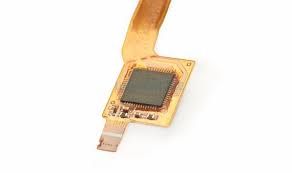
Can flexible PCBs be used in industrial applications?
One of the main factors that determines the price of a flex circuit board is its copper plating. This process works by filling in pads and traces with copper, which can make the board look smoother. It can also improve its electrical conductivity. Moreover, copper plating can reduce the thickness of pads on the board. This is necessary to avoid stress in those areas that will be subjected to a lot of bending and twisting.
Another factor that determines the price of a fabbed flex circuit board is the quality of its materials and workmanship. This includes the thickness of its substrate and copper layer, as well as its adhesive. The conductive copper layer is usually bonded to the substrate using an adhesive that’s flexible and durable enough to maintain integrity under dynamic bending and twisting conditions.
Flex circuit boards are made from various types of material, including polyimide and PET. These are laminated to a thin copper sheet that’s etched per precise design specifications. They’re then given a coverlay to protect the conductive copper layer and enhance insulation. A stiffener is placed on the flex circuit board after the coverlay has been applied to prevent it from being damaged during drilling and soldering.
A flexible PCB’s longevity depends on the way it’s manufactured and treated during assembly and shipping. Fortunately, manufacturers have advanced technology that helps them anticipate the materials’ movement and thermal coefficient to construct resilient circuit boards. The use of high-temperature solders is also an important factor in ensuring the durability of a flex circuit board.
Flex circuits are a must for many devices, and they’re also a valuable tool in manufacturing new products. Nevertheless, it’s important to understand the differences between a flexible PCB and a flex-rigid circuit board before deciding which type of product you need. Flex-rigid circuits have rigidity that allows them to withstand a wider range of environments and conditions than their flexible counterparts.